
Research initiatives are the smallest scale and shortest duration projects funded by SRI. They focus on early-stage visioning and team building through workshops and related activities.

Using Art to highlight failure as progress in Space exploration
This initiative uses art and science collaborations to highlight the role of failure in the scientific process, especially in space science, by treating failed experiments, unexpected results, and technical missteps as creative and educational opportunities. Its focus is to normalize failure, foster cross-disciplinary partnerships between artists and scientists, and use public exhibitions, lectures, and workshops to engage students, the campus community, and broader audiences in conversations about space research and creativity.
Lead: Shi (Joyce) Sim

Flow Instabilities and Fluid Dynamics for Space Applications
This initiative aims to create an interdisciplinary hub at Georgia Tech focused on understanding and predicting fluid and flow instabilities in reduced-gravity environments. Its goal is to improve the safety and performance of space missions by advancing knowledge of cryogenic propellant behavior, thermal-fluid instabilities, and capillary-driven flows, laying the groundwork for a future Center for Space Flow Physics and Instabilities.
Lead: Suhas S. Jain
Extreme-Environment Autonomous Microsystems
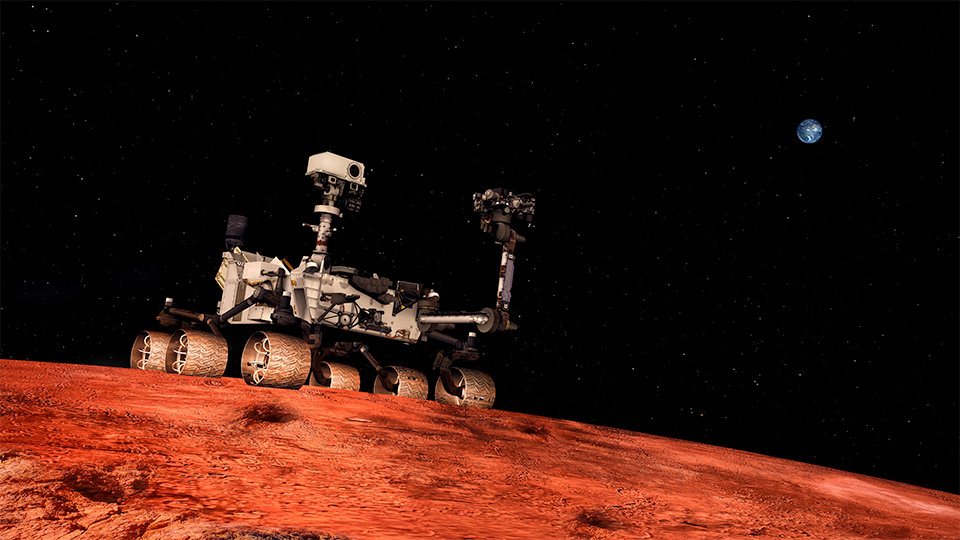
This initiative aims to develop autonomous microsystems that can operate in extreme environments—from space to underground and undersea—for next-generation sensing, communication, and control. Its focus is to advance technologies like smart sensors, multi-agent communication, and AI-based anomaly detection, establishing Georgia Tech as a leader in extreme-environment autonomous systems.
Lead: John Cressler

Southeast Analog Initiative at Georgia Tech
The Southeast Analog Initiative aims to establish the Southeastern U.S. as a hub for analog astronautics while attracting students, researchers, and partners from across the country and beyond. Centered at Georgia Tech, the initiative will create a repeatable, low-cost analog platform for simulating sustainable off-Earth living environments. Our vision is not only regional but also outward-looking: by drawing collaborators from diverse universities, disciplines, and cultural backgrounds, we will create missions that reflect the reality of international spaceflight.
Lead: Christopher Carr
RESCUE: Remote Environmental Sensing for Climate, Urban, and Ecological Systems
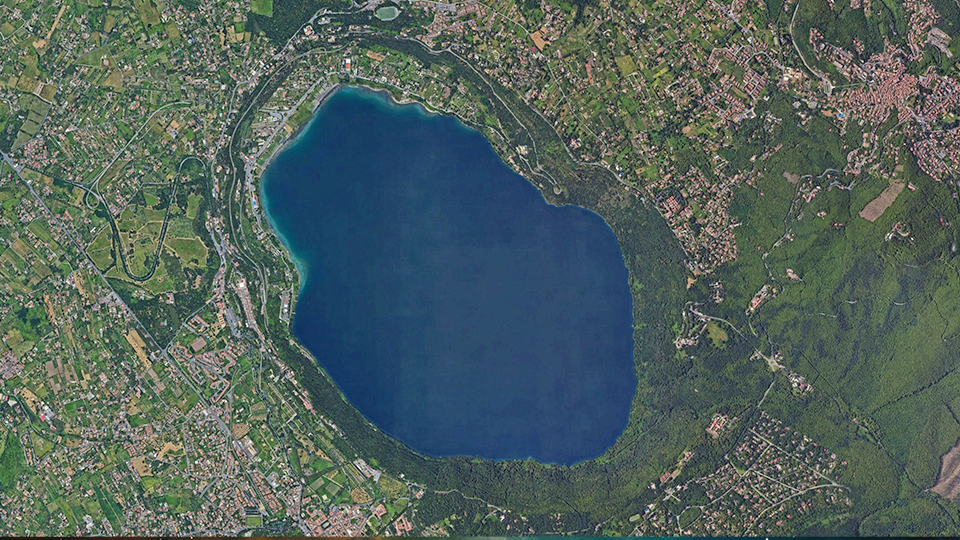
This initiative aims to create a national hub for using space-based remote sensing to address ecological and humanitarian challenges by connecting Georgia Tech researchers with communities affected by climate hazards, land-use change, and resource scarcity. Its focus is on leveraging satellite data—such as imagery, thermal data, and radar—to generate timely, actionable insights for disaster response, environmental management, and community resilience.
Lead: Lily Dove

SPRITE: Building a MIDEX Astrophysics Mission at Georgia Tech
SPRITE (SPace Radio Interferometric Telescope Explorer) is a Georgia Tech initiative developing a new NASA mission concept that uses two satellites working together as an interferometric observatory. By observing the universe in the millimeter waveband, SPRITE will produce high-resolution images of supermassive black holes and search for supermassive black hole binaries in the nearby universe.
Lead: Feryal Özel

Bioastronautics Initiative
Bioastronautics is the study of the effects of space and spaceflight on humans and the support and enhancement of human activity in space. This initiative spans areas such as protecting humans in extreme environments, enabling adaptation and performance during space missions, and designing environmental control and life-support systems for habitats. The initiative also includes advancing technologies that augment human performance, along with research on spacesuits, extravehicular activity, and the broader space life sciences.
Lead: Christopher Carr
Initiative Toward Georgia Tech NSF Expedition on Computing in Space
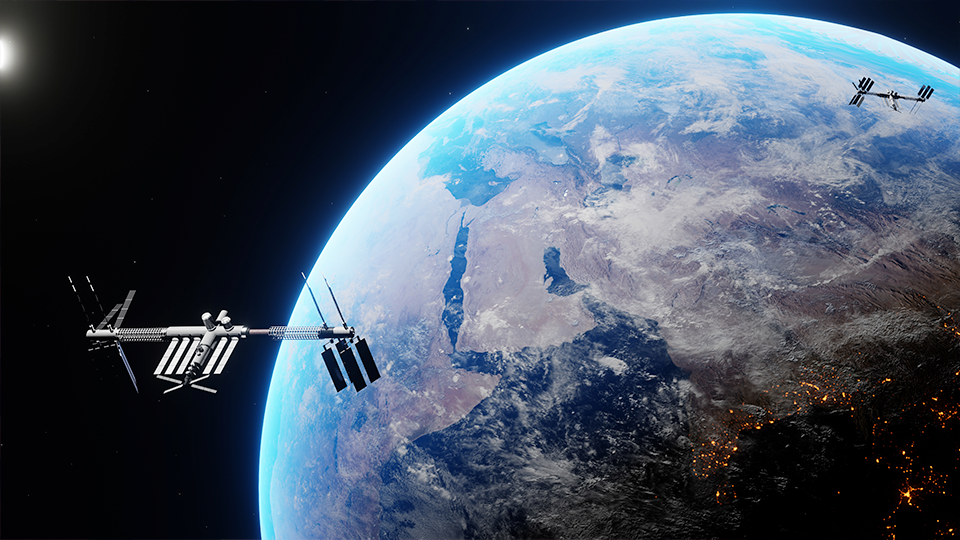
Low Earth Orbit (LEO) satellite networks are emerging as next-generation platforms for communication and computing, supporting services ranging from broadband and IoT to machine learning inference and disaster response. This project focuses on developing core technologies that will enable scalable, safe, secure, efficient, and flexible development, deployment, and management on satellite-based computing systems in Space. It aims to create a satellite computing stack that can support future LEO compute clouds with capabilities similar to terrestrial cloud systems, while meeting the unique constraints of operating in space. These technologies will form the basis for future LEO compute clouds and extend to satellite platforms supporting lunar and Martian environments.
Lead: Ada Gavrilovska, Saman Zonouz
FulminoSat: A CubeSat Formation Concept for Ionospheric Measurement through Multi-Modal Transient Signal Detection
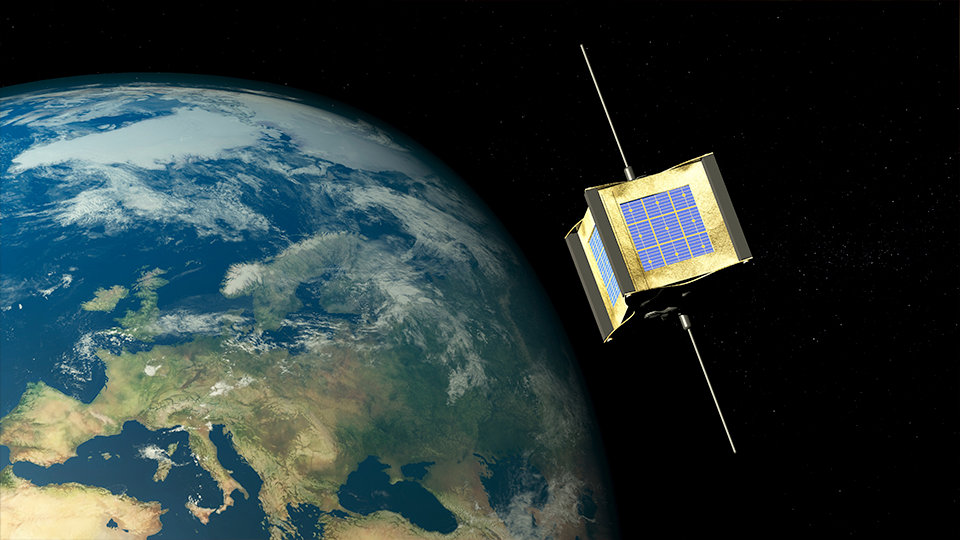
This initiative is developing FulminoSat, a CubeSat formation mission concept designed to detect transient broadband lightning signals using both optical and Radio Frequency (RF) sensors. Its focus is to use these multi-modal measurements to study ionospheric disturbances, severe weather phenomena, and the impacts of space and terrestrial weather on RF communications systems.
Lead: Michael Peterson

Precise Characterization of Dust Grains for Lunar Surface Operations
This initiative aims to establish the foundations for a lunar surface research program focused on understanding how sub-micron lunar dust particles become electrically charged. Its primary goal is to develop and test a new method for isolating, sorting, and precisely characterizing small charged dust grains, generating critical data that will advance lunar dust charging research and inform mitigation techniques for future lunar exploration.
Lead: Michael Chapman
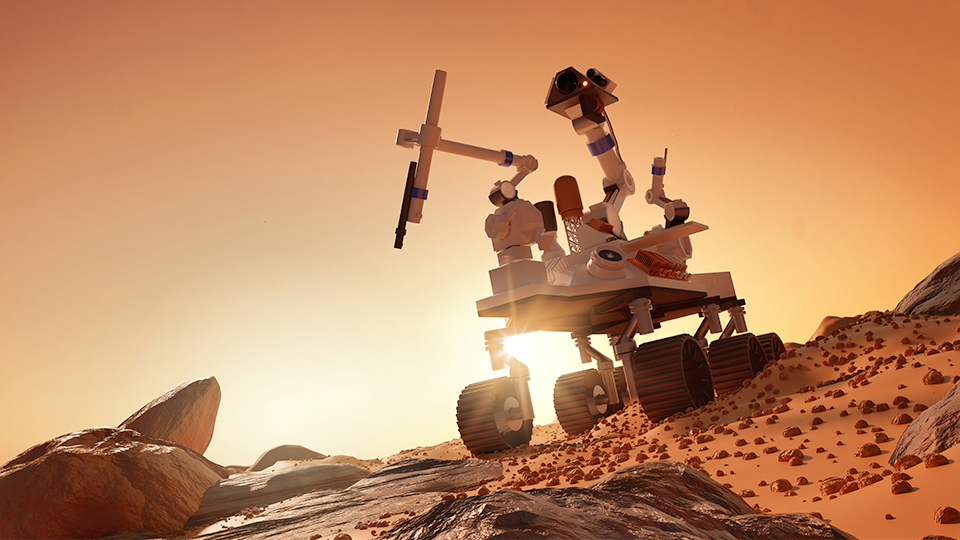
Development of a Radar Payload for Exploring Lunar and Martian Surfaces Using Rovers and Quadrotors
This initiative aims to develop a versatile, platform-independent radar payload to support sustained human and robotic operations on the Moon and Mars. Its focus is on creating a radar system that can image the subsurface for applications like water-ice mapping and cavity detection, while being deployable on a wide range of mobile platforms including rovers, flying vehicles, and hybrid mobility systems.
Lead: Indujaa Ganesh

Space Domain Awareness Research and Education
This project brings together Georgia Tech faculty across disciplines to map existing strengths in Space Domain Awareness, build collaborative research teams, pursue funding, and develop SDA-focused education and workforce programs.
Lead: Douglas Hope