
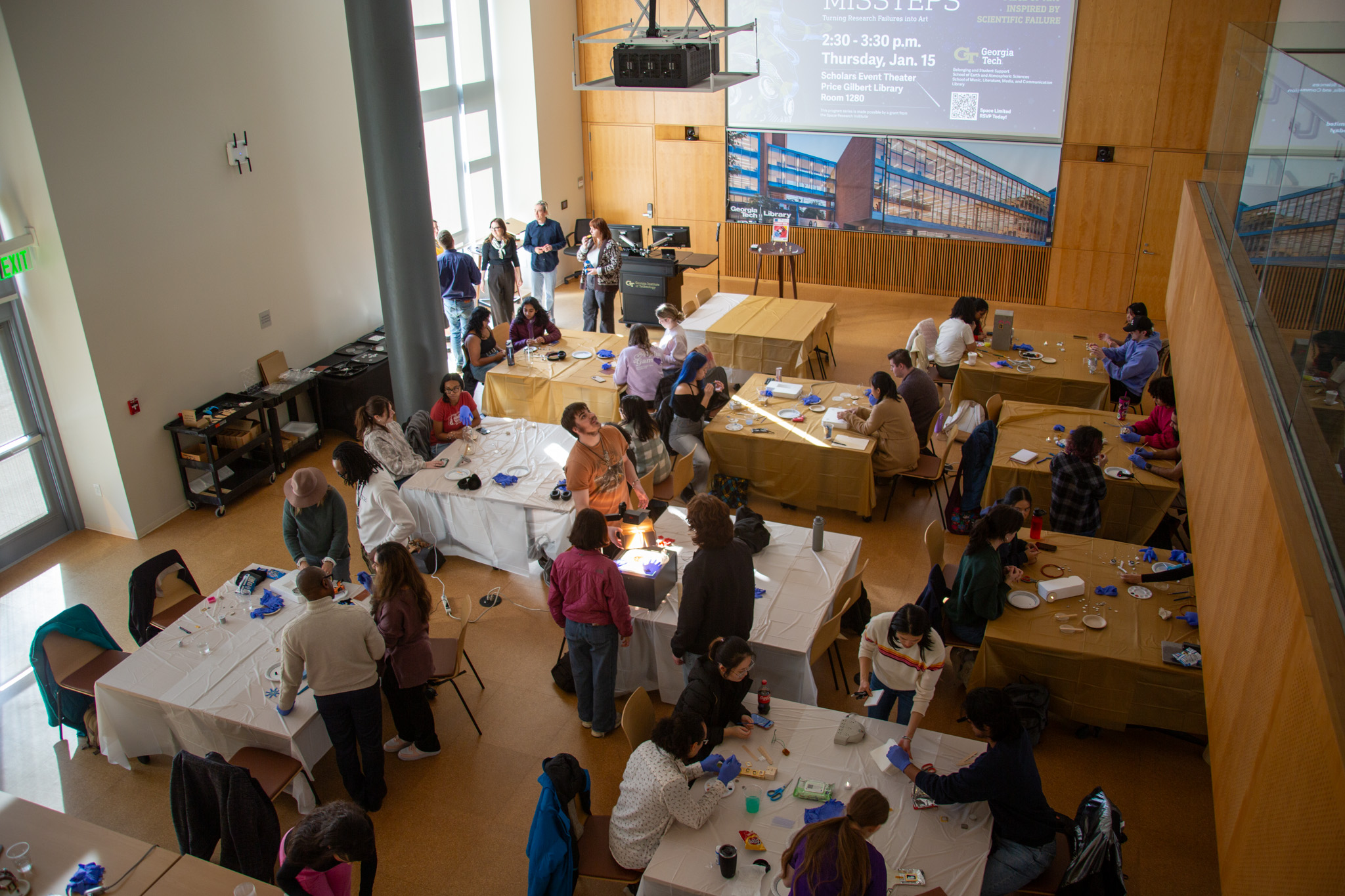
Turning Research Failures Into Art
Cosmic Missteps brings scientists and artists together to explore how uncertainty, mistakes, and unexpected results drive discovery in space research. Through talks and hands-on art making, failure becomes a starting point for creativity and learning.
About Cosmic Missteps
"Cosmic Missteps" is a series of events that bring together researchers, artists, students, and community members to examine real moments of scientific misinterpretation, unexpected results, and technical setbacks in space research. At each event, Georgia Tech scientists share personal research stories shaped by failure, followed by hands-on, guided art making led by professional artists. These creative exercises invite participants to reinterpret scientific challenges through visual expression, emphasizing curiosity, experimentation, and reflection.
By integrating art and science, Cosmic Missteps reframes failure as a productive and creative force rather than an endpoint. The series fosters cross-disciplinary collaboration, supports inclusive student engagement, and creates accessible pathways for the public to better understand how space exploration actually works through workshops, lectures, and public-facing experiences.
The Cosmic Missteps Series
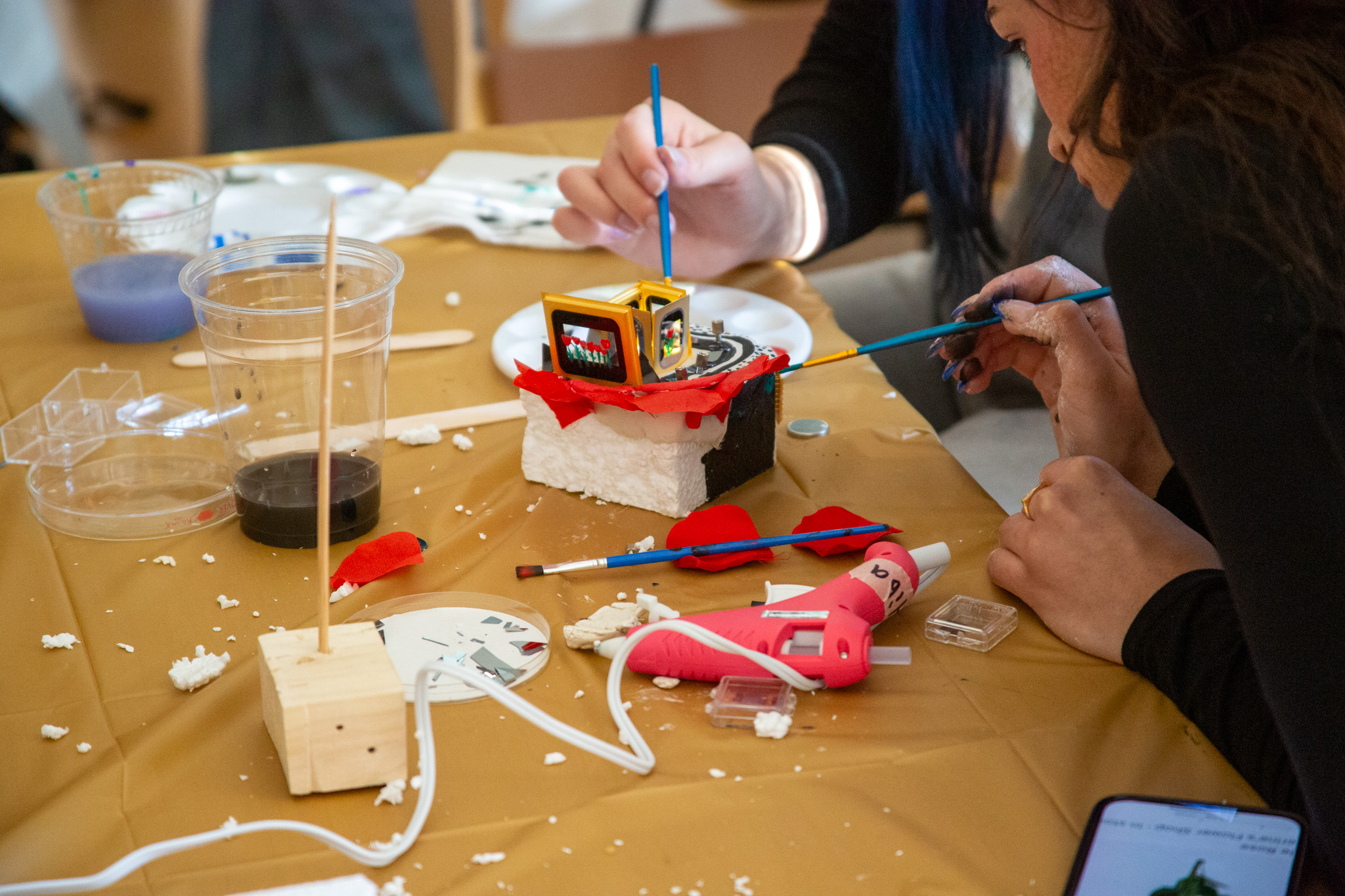
Turning Orbital Setbacks Into Motion
This Cosmic Missteps workshop invited participants to step inside a real engineering setback and discover its creative potential. Space Research Institute Director Jud Ready shared the story of solar cells in orbit that failed to perform as intended, offering an honest look at how unexpected outcomes shape space research. Building on that narrative, artist Dylan Cawthorne led attendees in transforming the technical failure into a kinetic sculpture, using motion and form to explore new ideas sparked by uncertainty. Through conversation and hands-on making, the event reframed failure as a powerful catalyst for curiosity, experimentation, and discovery.
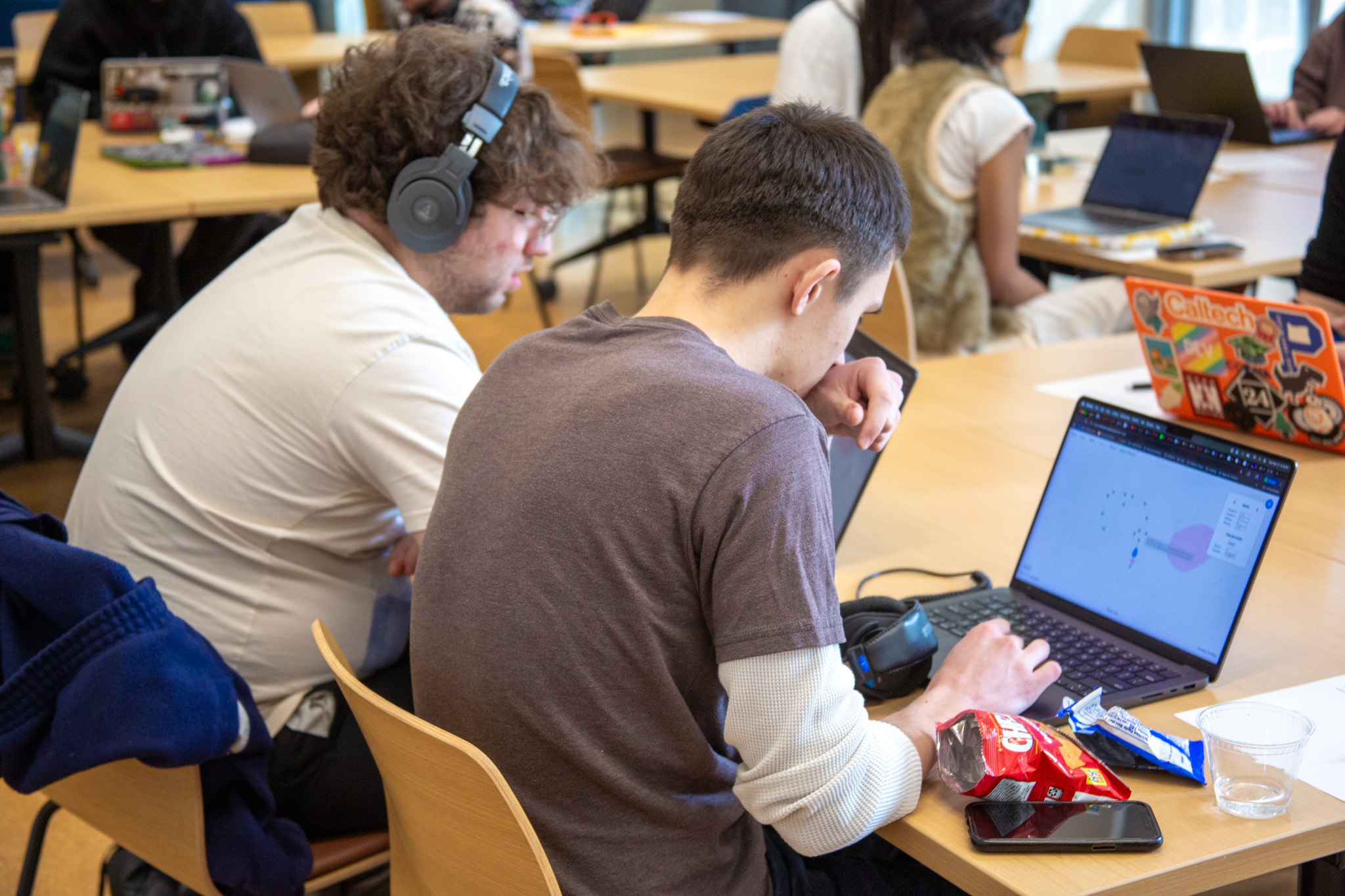
Failure, Reconstructed in Sound
Rooted in the realities of field research where uncertainty and failure are unavoidable, this Cosmic Missteps workshop explored resilience as a scientific and creative practice. Researcher Amanda Stockton shared how studying extreme Earth environments as space analogs demands constant adaptation when plans go awry. Sound artist Zeynep Özcan then guided participants in using Inviso to turn personal experiences of failure into interactive sonic virtual spaces, highlighting how breakdowns can spark learning, experimentation, and growth.
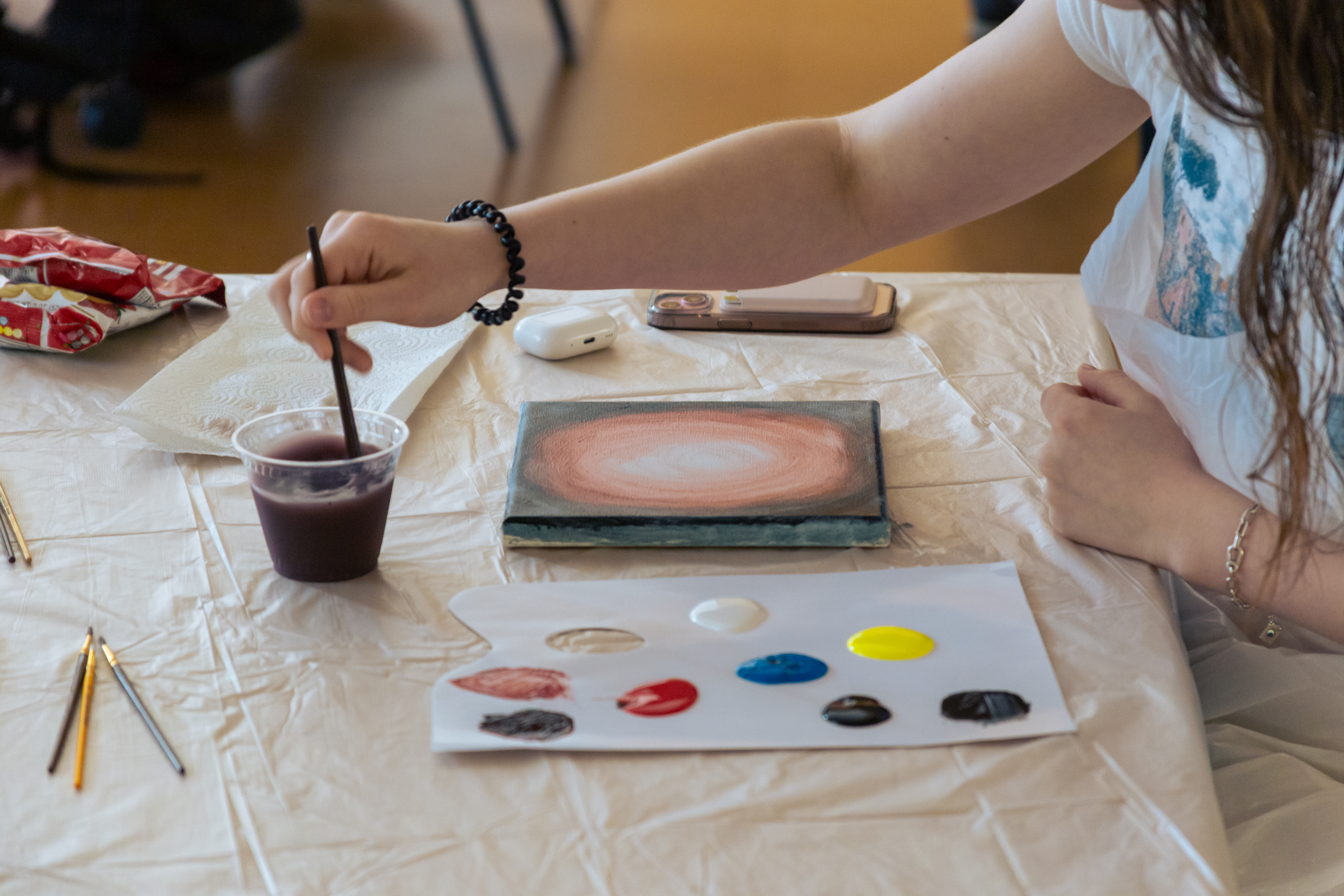
Shifting Images, Shifting Understanding
Centered on the challenges of interpreting what we see in space, this Cosmic Missteps workshop examined how mistaken assumptions and shifting perspectives influence scientific discovery. Astrophysicist Paul Sell shared stories drawn from both a historical misinterpretation of cosmic imagery and his own research on the unusual stellar system Circinus X‑1, illustrating how understanding evolves over time. Painter and astro‑artist Ash Wheeler then guided participants in creating painted responses to scientific narratives shaped by uncertainty, inviting hands-on exploration of how failure and revision can spark creativity and new ways of seeing.
The Making of Cosmic Missteps
Cosmic Missteps is funded by the Space Research Institute and is part of an SRI Initiative led by School of Earth and Atmospheric Sciences Assistant Professor Shi Joyce Sim. The event series is supported by Georgia Tech’s Belonging and Student Support, the School of Earth and Atmospheric Sciences, the School of Literature, Media, and Communication, and the Georgia Tech Library, reflecting a shared commitment to creativity, belonging, and innovation in space research.
Thanks to the following people for making this series possible:
Catherine Manci (Library)
Alexandria Smith (School of Music)
Melissa Gerrior (Student engagement)
Krystian Ramlogan (School of Literature, Media and Communications)
Lisa Yaszek (School of Literature, Media and Communications)